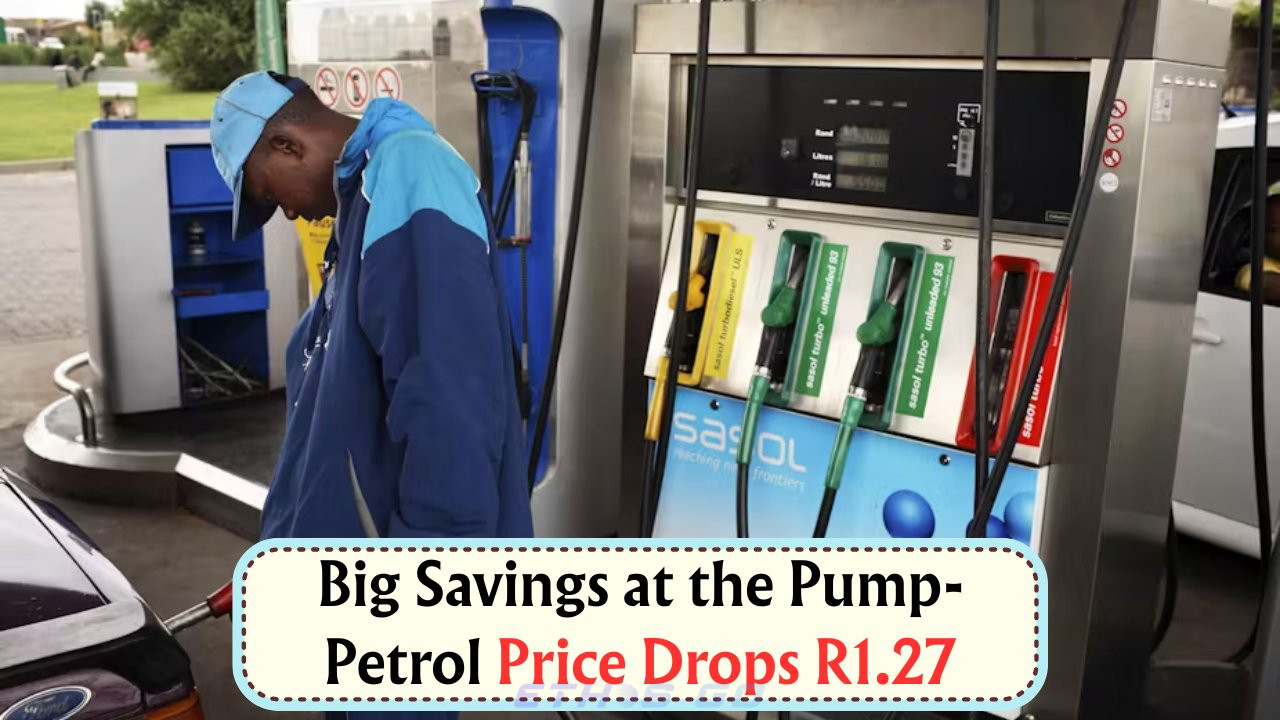
Petrol Prices to Fall by R1.27: Province-Wise Rate Update Effective June 1: South Africans have reason to rejoice as petrol prices are set to decrease by R1.27 per litre starting June 1. This significant drop in fuel costs comes as a relief amid rising living expenses and economic challenges. The Department of Mineral Resources and Energy has announced this reduction as part of its monthly review, aiming to ease the financial burden on motorists across the country. This price cut is expected to have a positive impact on both consumers and businesses, as transportation costs play a crucial role in the economy. As the world navigates fluctuating oil prices and geopolitical tensions, this decrease in petrol prices will certainly be welcomed by South Africans looking to stretch their budgets further.
Understanding the R1.27 Petrol Price Reduction
The forthcoming R1.27 reduction in petrol prices is primarily driven by changes in the international oil market and the strengthening of the rand against the US dollar. As oil prices ease globally, South Africa has benefitted by procuring fuel at a lower cost. Additionally, the rand’s performance against major currencies has provided some relief in import costs. The Department of Mineral Resources and Energy reviews petrol prices monthly, taking into account factors such as the exchange rate, international oil prices, and various levies. This ensures that adjustments are made in response to global market conditions, allowing consumers to benefit when conditions are favourable. By passing on these savings, the government hopes to alleviate some of the financial pressures faced by its citizens.
- Reduction driven by international oil market changes
- Strengthening of the rand contributes to lower petrol costs
- Monthly price reviews ensure responsive adjustments
- Government aims to pass savings to consumers
- Economic relief expected for motorists and businesses
Impact of Petrol Price Drop on South African Economy
The R1.27 price drop is poised to have a ripple effect across the South African economy. For consumers, reduced petrol prices mean more disposable income to spend on other necessities, potentially boosting retail sectors. Additionally, businesses reliant on transportation, such as logistics and delivery services, will benefit from lower operational costs, which could lead to reduced prices for goods and services. This, in turn, may stimulate economic activity and growth. The agricultural sector, which often faces high transportation costs, could also see improvements, leading to more competitive pricing of products in local markets. While the direct impact of the price reduction is immediate, the long-term effects could foster economic resilience and stability.
- Increased disposable income for consumers
- Lower operational costs for transport-reliant businesses
- Potential price reductions in goods and services
- Boost in economic activity and growth
Province-Wise Breakdown of New Petrol Rates
Here’s a detailed look at how the petrol price reduction will affect different provinces:
 Check Eligibility and Claim Refund Instructions – ABSA Bank to Refund Hidden Charges by July
| Province | Old Price (R/L) | New Price (R/L) |
|---|---|---|
| Gauteng | R21.54 | R20.27 |
| Western Cape | R21.29 | R20.02 |
| KwaZulu-Natal | R21.44 | R20.17 |
| Eastern Cape | R21.39 | R20.12 |
| Free State | R21.47 | R20.20 |
| Limpopo | R21.52 | R20.25 |
| Mpumalanga | R21.49 | R20.22 |
| North West | R21.45 | R20.18 |
Comparative Analysis of Petrol Prices
When examining petrol prices globally, South Africa’s adjustment provides a competitive edge in the African market. While countries like Nigeria and Kenya also experience fluctuations, the timely reduction in South Africa puts it in a favourable position among its peers. With the rand’s recent strength, imported fuel costs have decreased, allowing for these internal adjustments. This is a strategic move by the South African government to bolster the economy, ensuring that local industries remain competitive on a global scale. The consistent review of petrol prices is part of a broader economic strategy to maintain affordability and encourage economic growth.
| Country | Current Price (USD/L) | Adjusted Price (USD/L) | Comparison |
|---|---|---|---|
| South Africa | $1.40 | $1.30 | Favourable |
| Nigeria | $1.45 | $1.45 | Stable |
| Kenya | $1.50 | $1.50 | Higher |
| Egypt | $1.35 | $1.35 | Stable |
| Angola | $1.25 | $1.25 | Lower |
Strategies for Maximizing Savings with New Petrol Prices
With the petrol price reduction, South Africans can implement strategies to further maximize savings. Here are some tips to consider:
- Carpooling: Sharing rides with others can significantly cut down on fuel expenses.
- Efficient Driving: Maintaining a steady speed and reducing idling can improve fuel efficiency.
- Regular Maintenance: Keeping vehicles in top condition ensures optimal fuel consumption.
By adopting these practices, consumers can take full advantage of lower petrol prices while contributing to environmental sustainability.
Long-term Implications of Consistent Petrol Price Reductions
While the immediate effects of the petrol price reduction are clear, the long-term benefits could be substantial if such adjustments continue. Consistent price decreases can lead to sustained economic growth, as businesses can plan with greater financial certainty. Furthermore, consumers might develop more confidence in the market, leading to increased spending and investment. Over time, reduced transportation costs can stimulate tourism, encouraging both local and international travel. These factors combined could result in a more robust and resilient South African economy.
| Factor | Short-term Effect | Long-term Effect | Outcome |
|---|---|---|---|
| Consumer Spending | Increases | Sustains | Economic Growth |
| Business Planning | Stabilizes | Strengthens | Market Confidence |
| Tourism | Boosts | Expands | Industry Growth |
Environmental Benefits of Reduced Petrol Prices
In addition to economic advantages, the reduction in petrol prices can also have positive environmental impacts. With more affordable fuel, there is potential for increased investment in cleaner technologies and alternative fuels. As transportation becomes more cost-effective, industries may explore greener options, such as electric vehicles or hybrid models. Additionally, lower petrol prices can facilitate the transition to public transport, reducing the overall carbon footprint. These environmental benefits align with global sustainability goals and contribute to a healthier planet.
- Potential for investment in cleaner technologies
- Encouragement of electric and hybrid vehicle use
- Facilitation of public transport transition
- Contribution to global sustainability goals
Social Implications of Petrol Price Adjustments
Petrol price changes can have significant social implications. A decrease in prices can lead to improved access to transportation, particularly for lower-income communities. This can enhance mobility, allowing individuals to access education, employment, and healthcare more easily. Moreover, reduced transportation costs can lower the price of goods, making essential items more affordable for all South Africans. By alleviating financial pressures, price reductions can also contribute to improved quality of life and social equity across the nation.
- Improved access to transportation
- Enhanced mobility for lower-income communities
- Lower prices for goods
- Improved quality of life
FAQ Section
What factors influence petrol price changes in South Africa? Petrol prices are influenced by international oil prices, exchange rates, and government levies.

How often are petrol prices reviewed in South Africa? Petrol prices are reviewed monthly by the Department of Mineral Resources and Energy.
Will the petrol price reduction affect diesel prices? Diesel prices are reviewed separately, but similar factors influence both petrol and diesel price changes.
How can consumers maximize savings with the new petrol prices? Consumers can maximize savings by carpooling, driving efficiently, and maintaining their vehicles.
What are the potential long-term benefits of reduced petrol prices? Long-term benefits include sustained economic growth, increased spending, and improved environmental sustainability.
Departmental Contact Details
Department of Mineral Resources and Energy
Email: [email protected]
Helpline: 0800 123 456
Official Site: www.dmr.gov.za
Petroleum Agency SA
Email: [email protected]
Helpline: 0860 123 456
Official Site: www.petroleumagency.co.za
South African Petroleum Industry Association
Email: [email protected]
Helpline: 087 123 4567
Official Site: www.sapia.co.za
Energy Regulator of South Africa
Email: [email protected]
Helpline: 012 401 4600
Official Site: www.nersa.org.za
Road Freight Association
Email: [email protected]
Helpline: 011 974 4399
Official Site: www.rfa.co.za