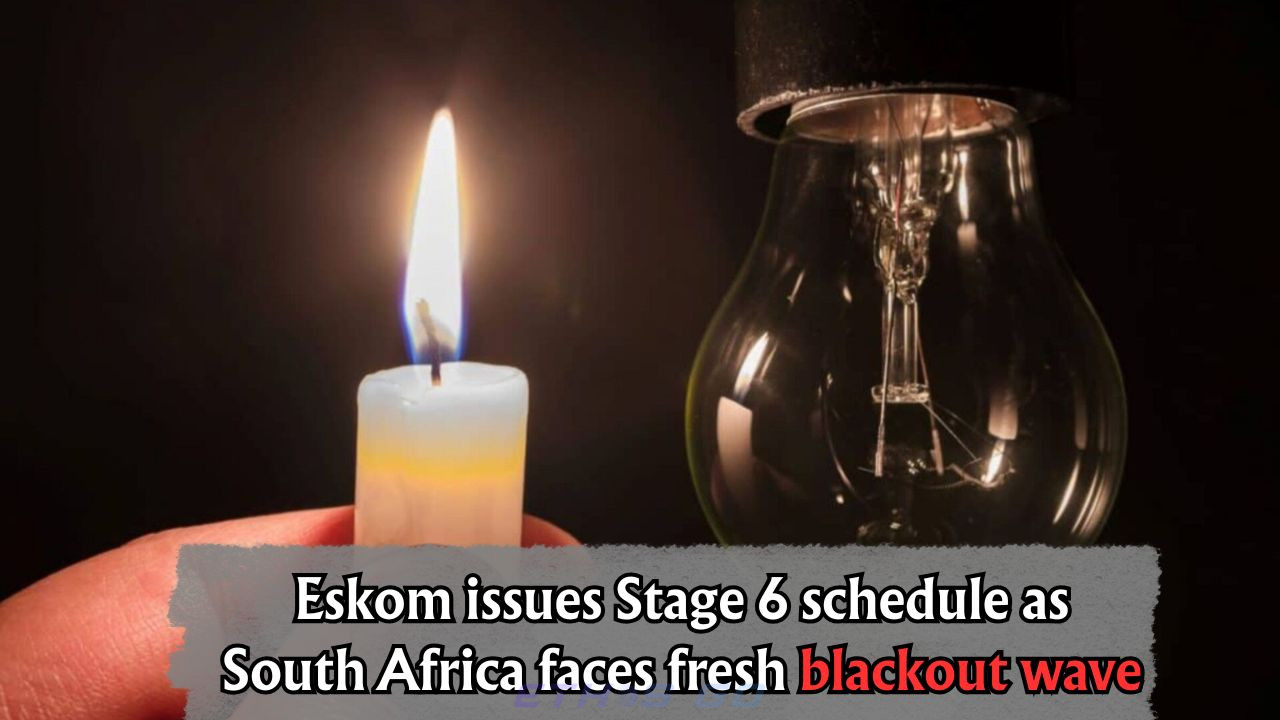
Eskom Declares Stage 6 Load Shedding: As South Africa grapples with ongoing energy challenges, the announcement of Stage 6 load shedding by Eskom in June has intensified discussions around the country’s power crisis. This move marks one of the most severe steps taken in recent years, highlighting the critical state of energy supply. Load shedding, a practice employed to prevent the national grid from collapsing, is a familiar yet unwelcome occurrence for many South Africans. Stage 6 entails even more frequent and longer interruptions, affecting households, businesses, and industries nationwide. The unpredictable nature of these outages disrupts daily life, with significant implications for productivity and economic stability. Amidst this backdrop, voices across the country are calling for more effective solutions and urgent reforms within Eskom to address the root causes of these power shortages.
Understanding Stage 6 Load Shedding in South Africa
Stage 6 load shedding reflects a dire situation in South Africa’s energy sector. It involves cutting off up to 6000 MW of electricity from the national grid, meaning more extensive and frequent power outages. Each stage of load shedding is implemented in increments of 1000 MW, with Stage 6 being a critical level where the load is shed more frequently to maintain grid stability. The decision to escalate to Stage 6 indicates a significant shortfall in electricity supply, exacerbated by a combination of aging infrastructure, maintenance backlogs, and operational inefficiencies within Eskom.
- Stage 1: 1000 MW load reduction
- Stage 2: 2000 MW load reduction
- Stage 3: 3000 MW load reduction
- Stage 4: 4000 MW load reduction
- Stage 5: 5000 MW load reduction
- Stage 6: 6000 MW load reduction
Impact of Stage 6 Load Shedding on Businesses
For businesses across South Africa, Stage 6 load shedding presents a formidable challenge. The frequent power cuts disrupt operations, leading to decreased productivity and increased operational costs. Businesses that rely heavily on electricity, such as manufacturing and retail, are particularly hard hit. The unpredictability of power supply forces many companies to invest in alternative energy solutions like generators and solar panels, which can be costly. Moreover, small businesses, which may not have the financial resources to cushion these impacts, face the risk of closure, further affecting the economy. The hospitality sector, reliant on consistent electricity for customer service and food preservation, also suffers significant setbacks during these periods.
| Business Sector | Impact | Adaptation Measures | Challenges |
|---|---|---|---|
| Manufacturing | Low productivity | Backup generators | High costs |
| Retail | Inventory spoilage | Solar panels | Initial investment |
| Hospitality | Service disruption | Power banks | Customer dissatisfaction |
| Small Businesses | Risk of closure | None | Lack of funds |
| IT Services | Data loss risk | Cloud solutions | Security issues |
The Role of Eskom in South Africa’s Power Crisis
Eskom, South Africa’s primary electricity supplier, plays a central role in the ongoing power crisis. The utility has been plagued by a myriad of challenges, including aging power plants, financial mismanagement, and corruption scandals that have hindered its ability to provide reliable electricity. Over the years, efforts to overhaul Eskom’s operations and improve efficiency have faced numerous setbacks, with frequent executive changes and policy shifts. The national government’s attempts to stabilize Eskom financially and strategically have been met with mixed results, often falling short of expectations. As the backbone of the country’s electricity supply, Eskom’s performance is crucial to South Africa’s economic prospects, making its reform a national priority.
 Check Eligibility and Claim Refund Instructions – ABSA Bank to Refund Hidden Charges by July
- Challenges Faced by Eskom:
- Outdated infrastructure
- Maintenance backlogs
- Financial difficulties
- Operational inefficiencies
- Governance issues
Potential Solutions to Alleviate Load Shedding
Addressing load shedding requires a multifaceted approach. Investing in renewable energy sources, such as wind and solar, can significantly alleviate pressure on the national grid. Additionally, the government could incentivize energy conservation measures among consumers and businesses. Streamlining operations within Eskom to reduce inefficiencies and improve maintenance schedules is also essential. Furthermore, diversifying energy sources and encouraging private sector involvement in electricity generation could provide much-needed relief. These measures, coupled with transparent governance and strategic planning, are vital to ensuring a stable power supply for the future.
- Renewable Energy Investments: Solar farms
- Private Sector Inclusion: Independent power producers
- Energy Conservation: Consumer awareness campaigns
- Operational Improvements: Efficient maintenance
- Policy Reforms: Transparent governance
Impact of Load Shedding on Daily Life
Load shedding deeply impacts daily life in South Africa, affecting everything from household routines to public services. With frequent outages, South Africans face challenges in maintaining regular schedules, particularly in the evening when power cuts are most common. Families are forced to adapt their lifestyles, often relying on alternative lighting and cooking sources. Public services, including healthcare institutions, also struggle to operate efficiently during outages, impacting service delivery and patient care. The education sector, too, experiences significant disruptions, with schools and universities facing challenges in conducting classes and managing digital resources.
- Households: Alternative lighting
- Healthcare: Impact on service delivery
- Education: Disrupted learning
- Public Transport: Delays and inefficiencies
- Communication: Network outages
Future Outlook for South Africa’s Power Supply
The future of South Africa’s power supply remains uncertain, with substantial challenges still to be addressed. However, ongoing efforts to reform Eskom and integrate renewable energy offer a glimmer of hope. The government’s commitment to restructuring the power sector and fostering innovation is crucial to achieving long-term stability. Collaboration between public and private sectors can accelerate the transition to a more sustainable energy model. As South Africa navigates these challenges, the resilience and adaptability of its citizens play a vital role in shaping a brighter future.
- Integrating renewables
- Enhancing energy efficiency
- Fostering public-private partnerships
- Developing new technologies
- Improving governance frameworks
FAQ Section
What is Stage 6 load shedding? Stage 6 load shedding involves reducing up to 6000 MW from the national grid, resulting in frequent and extended power outages.
How does load shedding affect businesses? It disrupts operations, increases costs, and can lead to productivity losses, particularly for energy-dependent sectors.
What solutions can mitigate load shedding? Investing in renewables, improving Eskom’s operations, and encouraging energy conservation can help alleviate load shedding.
How does load shedding impact daily life? It affects household routines, public services, and education, necessitating lifestyle adjustments and alternative solutions.
What is being done to resolve the power crisis? Efforts include Eskom reforms, renewable energy integration, and fostering public-private collaborations.